테크니컬 세라믹의 정의 및 범위
테크니컬 세라믹의 정의 및 범위
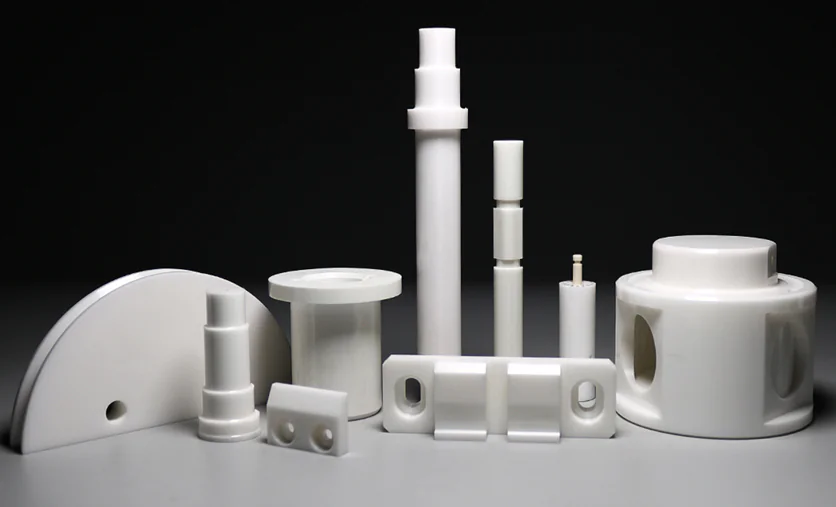
Technical ceramics—also known as engineering ceramics, industrial ceramics, or high-performance ceramics—are a specialized class of inorganic nonmetallic materials engineered to meet the demands of high-tech and industrial applications. Unlike traditional ceramics (e.g., pottery, tableware, tiles) made from natural clay, technical ceramics are designed for extreme performance, with core characteristics that set them apart:
- Raw Materials: High-purity, often synthetic inorganic powders (e.g., alumina Al₂O₃, silicon nitride Si₃N₄, zirconia ZrO₂, silicon carbide SiC) are used instead of natural clay or quartz sand.
- Manufacturing Processes: Produced through precise compositional design and advanced manufacturing technologies such as isostatic pressing, injection molding, and high-temperature sintering.
- Performance & Applications: Possess exceptional mechanical, thermal, chemical, and functional properties, serving as indispensable key materials in high-tech fields such as aerospace, electronic information, and biomedical engineering.
High-Purity and Customizable Raw Material Base
A fundamental prerequisite of technical ceramics is their high-purity, customizable raw material system, which distinguishes them from traditional ceramics:
- 고순도: Raw material purity typically exceeds 99%, with some reaching 99.99%, avoiding interference from impurities in natural minerals.
- Customizability: By adding rare-earth elements or metal oxides, properties such as toughness, thermal conductivity, and electrical performance can be precisely tailored to meet specific application requirements.This “designable” nature of raw materials makes technical ceramics a “tailor-made” material solution rather than products that passively rely on natural compositions.
Advanced and Precise Preparation Processes
테크니컬 세라믹의 탁월한 특성은 엄격하게 제어되는 첨단 제조 공정을 통해 달성됩니다:
- Forming: Precision techniques such as isostatic pressing, injection molding, and 3D printing ensure green bodies with micron-level dimensional accuracy, avoiding the larger errors of traditional manual forming.
- 소결: Usually conducted at temperatures between 1400–2000°C in controlled atmospheres such as nitrogen, argon, or vacuum to prevent oxidation or decomposition of raw materials, ultimately yielding products with uniform microstructures.These sophisticated processes overcome the inherent limitations of traditional ceramics, such as porous structures and unstable performance.
Fine Microstructure and Excellent Performance
정밀한 공정 제어를 통해 테크니컬 세라믹은 기존 세라믹을 훨씬 능가하는 성능으로 조밀하고 균일한 미세 구조를 형성합니다:
- 마이크로 구조:
- Porosity is typically below 1%.
- Grain sizes are small and uniform, potentially controlled at the nanoscale.
- Minimal or no glassy phase, resulting in a purer structure.
- 뛰어난 성능:
- Mechanical Properties: High strength (5–10 times that of traditional ceramics), hardness (second only to diamond), and impact resistance. Some zirconia ceramics even exhibit toughness approaching that of certain metals.
- Thermal Properties: Many materials (e.g., SiC, Si₃N₄) can withstand temperatures above 2000°C and offer excellent thermal shock resistance.
- Functional Properties: Can be engineered to be insulating, conductive, piezoelectric, biocompatible, transparent, etc., covering electrical, magnetic, optical, thermal, and biological applications.
Classification of Technical Ceramics
테크니컬 세라믹은 화학적 구성과 기능적 용도에 따라 분류할 수 있습니다:
- Silicate Ceramics: Made from natural raw materials combined with alumina or aluminosilicates; cost-effective with good thermal shock resistance and electrical insulation.
- Oxide Ceramics: Based on metal oxides such as Al₂O₃ and ZrO₂, offering outstanding high-temperature and corrosion resistance.
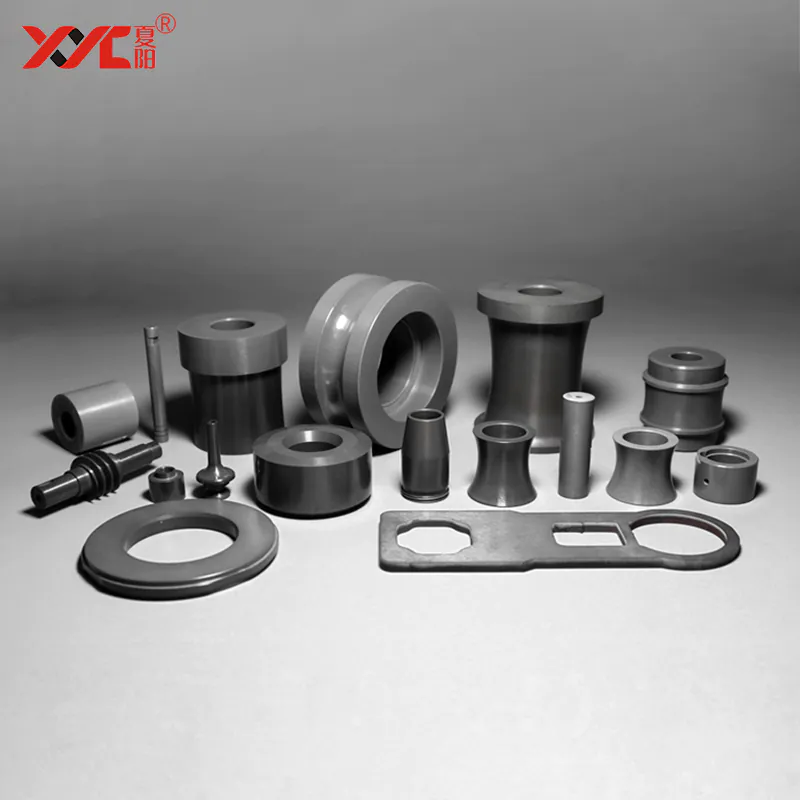
- Non-Oxide Ceramics: Based on compounds of carbon, nitrogen, and silicon (e.g., SiC, Si₃N₄), providing ultra-high-temperature strength and wear resistance for extreme environments.
- Piezoelectric Ceramics: A type of functional ceramic that converts between mechanical and electrical signals, serving as a key material in sensors and actuators.
Application Range and Technological Value
테크니컬 세라믹의 응용 분야는 열악한 기술 환경의 핵심 소재라는 정의를 직접적으로 반영합니다:
- 항공우주: Used in engine components and satellite structures due to their high-temperature resistance and low density.
- Electronic Information: Employed in integrated circuit substrates and ceramic capacitors, leveraging excellent electrical insulation and thermal stability.
- Biomedical: Biocompatible technical ceramics are used in artificial bones and dental implants, offering good integration with human tissue.
- Other Industries: In new energy, industrial machinery, and chemical equipment, they replace metals and polymers to meet performance requirements under extreme conditions.
Comprehensive Connotation of the Definition
요약하자면, 테크니컬 세라믹의 정의는 단순한 명칭이 아니라 다음과 같은 포괄적인 개념을 포함합니다:
- High purification and designability of raw materials.
- Precision and controllability of manufacturing processes.
- Overall superiority in performance.
- High specialization in applications.
As a key foundational material for advanced manufacturing, technical ceramics embody the integration of materials science and engineering technology, continuously driving innovation across multiple high-tech industries and earning them the reputation as “the materials of the future.”
 English
  German
  Korean